“I became a sex worker because I had no other choice,” says Nomalungelo Mvoti, a sex worker and single mother from Eswatini.
Mvoti’s life changed forever when she was just 15 years old. After she was raped by her uncle and became pregnant, her family refused to believe her. Instead of protecting her, they blamed her and forced her to leave home.
“I dropped out of school in Grade 11. My parents said I was lying because the person I accused was my uncle. I had nowhere to go,” Mvoti recalls, the memory still sharp. “I had nowhere to go.”
With no education, no family support, and a child to support, she turned to sex work to survive and provide for herself.
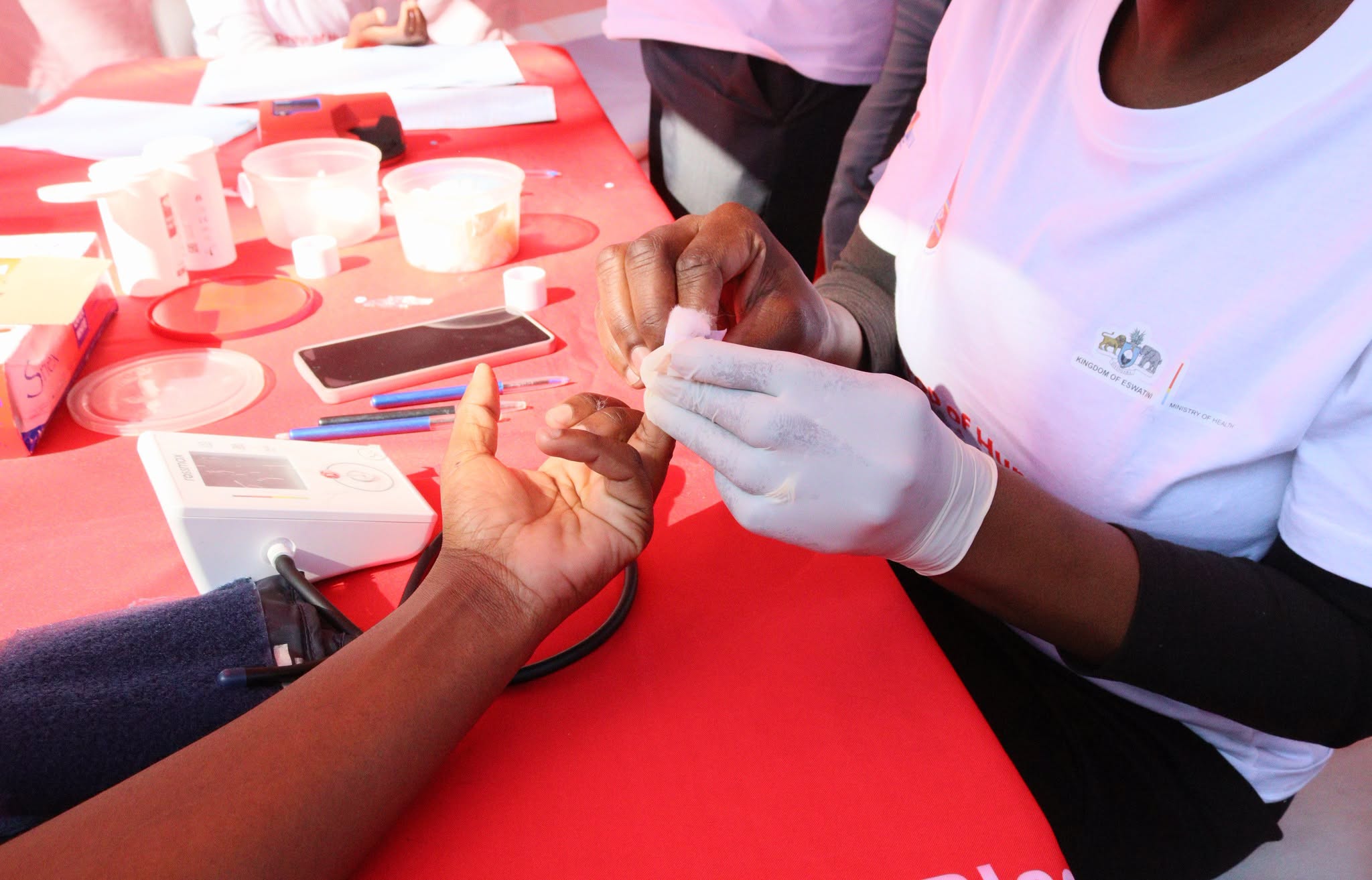
For years, although life was difficult, Mvoti and many other sex workers in Eswatini had access to community-based health services that made their lives safer. Mobile clinics offered free treatment for sexually transmitted infections (STIs), HIV services, condoms, lubricants, and psychosocial support in an environment where they were treated with dignity.
“The mobile clinics were our safe space,” Mvoti says. “We were never judged there.”
Crucially, they partnered with local organizations to provide food support, ensuring that women could feed their children while protecting their health.
Today, those engines have gone quiet. As international donor funding has pulled back, the mobile clinics have vanished from many communities. Without the clinics, Mvoti and her peers have been forced back into the public healthcare system, a system often hostile to sex workers.
“At public hospitals, we are judged because of the work we do. Sometimes there is no treatment available, and they only give us a prescription. I have to use the little money I earn to buy medicines,” Mvoti explains.
In a country with one of the highest HIV prevalence rates in the world with approximately 25.1% of adults aged 15 to 49 living with the virus, the breakdown of consistent care is catastrophic. For a single mother living with HIV, buying a prescribed drug out-of-pocket isn’t just a transaction, it is a choice between medical adherence and survival. Paying for medicine means sacrificing transport, electricity, or the preschool fees needed to give her children the start she was denied.
The ripple effects are immediate. To cope with the financial pressure, some women feel forced to agree to unsafe sex because clients pay more for it. Others, missing doses because they are consumed by the daily hustle to earn or because they cannot afford the clinic commute, default on treatment entirely.
“Sometimes we cannot buy the prescribed medicine, so we become sick,” Mvoti says simply. “When I cannot work because I am sick, I cannot support my children.”
Where systemic funding has failed, grassroots solidarity has stepped in.
Mvoti has found her footing in advocacy through Voice of Our Voices (VOOV), a sex worker-led organization and member of the African Sex Workers Alliance (ASWA). When the police target women on the streets or rights are violated, peer outreach workers provide the emergency support, legal referrals, and psychological care that institutions do not.
“They are our safe space now,” she says.
Finding her voice wasn’t easy. In an environment where criminalization and public exposure carry severe social consequences, speaking out takes immense courage. “At first I was afraid too. But I realized I suffered more when I stayed silent.”
Now, Mvoti is demanding a seat at the tables where funding frameworks are designed and health budgets are slashed. She argues that the people most affected by public health policies are the ones least consulted when the budget axes fall.
“They should involve us when making decisions. They should understand that life is hard and there are no jobs,” she says. “We are not criminals; we are trying to survive.”
Her demand to international donors and domestic policymakers is clear, practical, and urgent: bring back the mobile clinics, and expand access to comprehensive HIV prevention choices.
For Nomalungelo and thousands of women like her across Eswatini, healthcare isn’t an abstract policy debate, it is the baseline for dignity, survival, and the future of their families.
“Everyone deserves the right to protect their health,” she insists. “When people make decisions about us, they should first listen to us.”