A reflection on Sexual Health Awareness Month
September was Sexual Health Awareness Month, a time to talk openly about sexual health, the choices people should have over their bodies, and the services everyone should be able to access.
For us as sex workers, these conversations are about our everyday lives.
Sexual health means being able to access healthcare without being judged because we are sex workers. It means having access to condoms, contraception, HIV prevention options, testing and treatment, safe abortion and post-abortion care, STI services, and accurate information that allows us to make decisions about our own bodies.
It also means being treated with dignity.
Too often, sex workers still enter health facilities expecting questions that have little to do with the care we need, judgement about our work, or assumptions about our sexual lives. Some avoid seeking care altogether because of previous experiences of stigma, discrimination or breaches of confidentiality.
That should not be normal.
Choice matters
One of the conversations we continued to emphasise throughout September was choice.
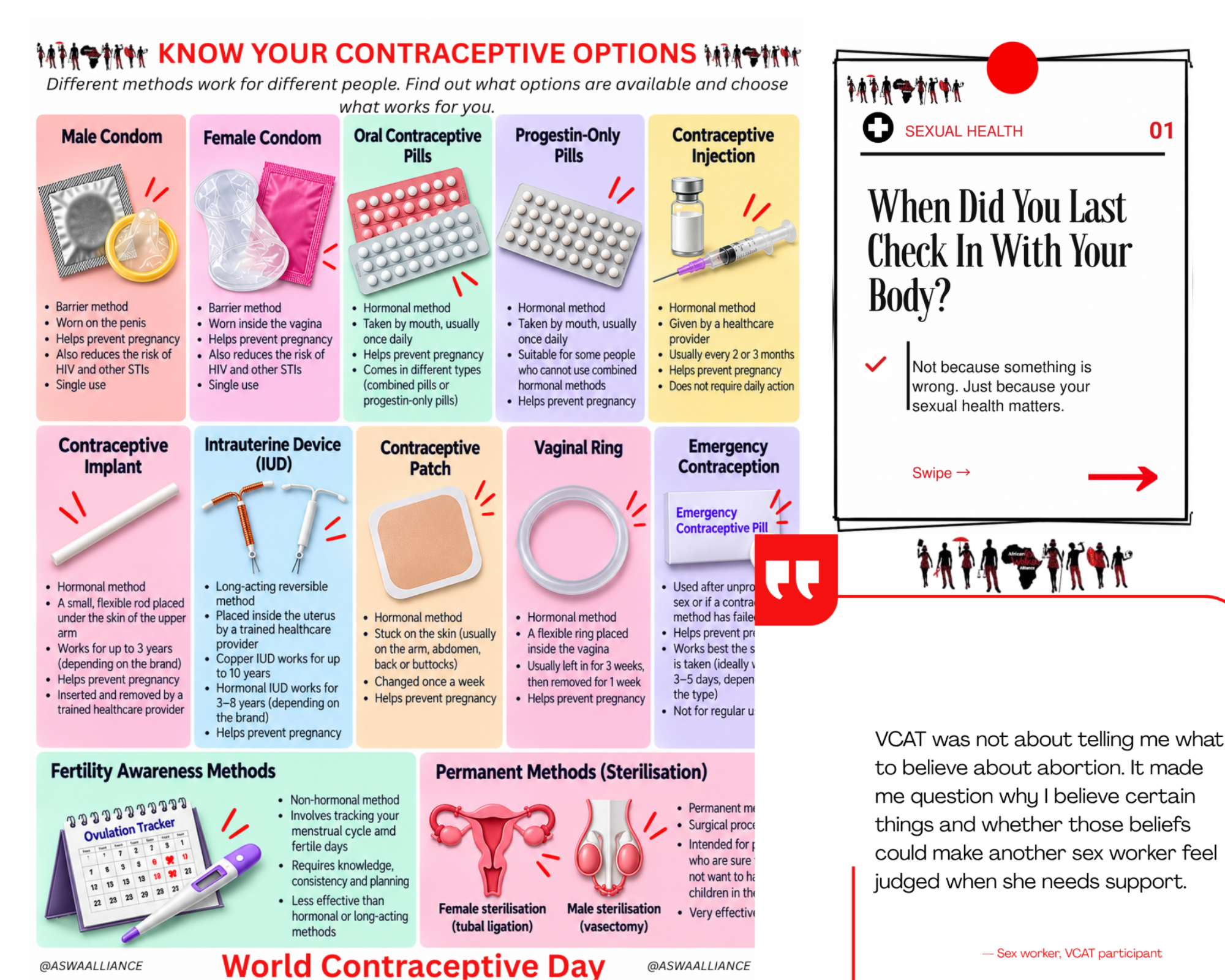
There is no single HIV prevention method, contraceptive method or sexual and reproductive health service that will work for every sex worker. Our bodies, circumstances and needs are different.
A young sex worker may need information about contraception. Another may be looking for HIV prevention options. Someone else may need abortion care, STI treatment, cervical cancer screening, pregnancy care or support after experiencing violence.
Good sexual healthcare starts by listening to what we need and allowing us to make informed decisions without pressure or judgement.
Criminalisation and stigma affect our health
We also cannot talk about sexual health without talking about the conditions in which sex workers live and work.
Criminalisation, violence and stigma can make it harder for sex workers to negotiate condom use, report violence, carry condoms without fear, access healthcare or seek help when our rights have been violated.
Restrictive laws and stigma around abortion can create another layer of barriers, particularly for sex workers who are already navigating discrimination within healthcare systems.
Sexual health therefore goes beyond what happens inside a clinic. It is also about whether we are safe, whether our rights are protected and whether we can seek healthcare without fear.
September may be over, but the conversation is not
During September, we marked World Sexual Health Day, World Contraception Day and International Safe Abortion Day. Each gave us an opportunity to talk about different parts of our sexual and reproductive health and rights.
But these issues do not end when the awareness month ends.
Sex workers need access to respectful, affordable and comprehensive sexual and reproductive healthcare throughout the year. We need prevention choices that respond to our realities. We need healthcare workers who listen rather than judge. We need policies that protect our health and rights rather than pushing us further away from essential services.
And most importantly, sex workers must be part of the conversations and decisions about the services, programmes and policies designed for us.
As we leave September behind, our message remains simple:
Sexual health is a right. As sex workers, we deserve choice, dignity, safety and healthcare without stigma or discrimination every day of the year.