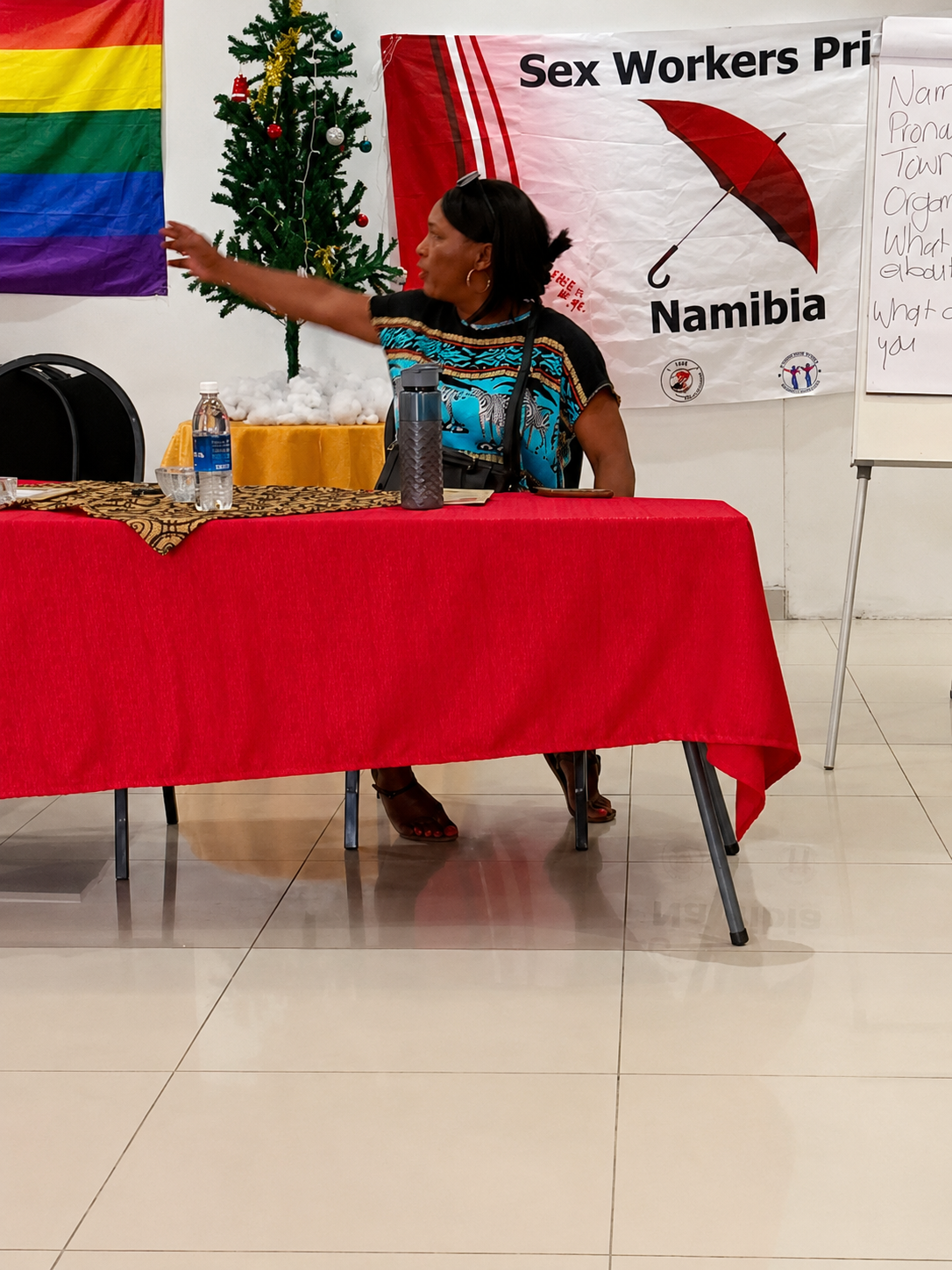
“If we remain silent, decisions will continue to be made about us without us.”
For Andreas (not his real name), a male sex worker in Oshikango, Namibia, this is more than a statement. It is a reality that shapes his everyday life.
Working in a border town where people constantly move between Namibia and Angola comes with unique challenges. Accessing consistent healthcare, HIV prevention and treatment services is not always easy. Add stigma, discrimination, fear of exposure and limited protection, and the barriers become even greater.
“As sex workers, we face many of the same challenges, including stigma, discrimination, violence and difficulties engaging with law enforcement,” he says.
But Andreas wants more than sympathy. He wants recognition, participation and the freedom to make decisions about his own health.
Through community education and advocacy support from Rachel Love Gawases, Andreas has gained a better understanding of the laws and policies affecting sex workers in Namibia.
His involvement in community discussions and advocacy initiatives has reinforced one important belief: sex workers must speak for themselves.
“Advocacy is not simply speaking on behalf of people. It should create space for affected communities to speak for themselves.”
He believes participation must go beyond being invited to consultations.
“We need to be involved in agenda-setting, programme design, budgeting, implementation, monitoring and evaluation.”
For him, meaningful participation also means having the resources to attend meetings, access information and contribute without sacrificing a day’s income.
When it comes to HIV prevention, Andreas believes having options on paper is not enough.
Condoms, lubricants, oral PrEP and emerging long-acting prevention technologies offer different possibilities. However, access remains a challenge, particularly for mobile sex workers and those unable to visit health facilities during regular working hours.
“A prevention method is only a real choice if someone can access it consistently, affordably and confidentially.”
He is particularly interested in long-acting prevention options such as Lenacapavir, which could offer an alternative to daily pills.
But he has a concern: will these innovations reach the communities that need them most?
“New technologies should not only be available to people in major cities or those who can afford private healthcare.”
He wants sex workers involved in decisions about how new prevention methods are introduced and delivered.
Reduced funding has also affected community mobilisation, advocacy, prevention education and outreach services.
“When funding is reduced, organisations often have to prioritise essential service delivery and may have fewer resources for advocacy.”
Andreas warns that weakening community-led systems also weakens accountability and limits access to prevention choices.
Andreas wants policymakers to understand that sex workers are not merely beneficiaries of programmes. They are rights holders, experts in their lived realities and essential partners in shaping effective policies.
His message is simple:
“Do not give communities only one option and call it choice.”
He wants access to a full range of HIV prevention options, confidential healthcare, protection from discrimination and meaningful participation in decisions affecting sex workers.
And above all, he wants policymakers to listen.
“Nothing about sex workers should be decided without the meaningful participation of sex workers themselves.”
Editor’s note: Andreas is a pseudonym used to protect the identity and safety of the interviewee. This story was documented as part of ASWA’s initiative on lived experiences, policy and advocacy, and HIV prevention choices.