As the world marks the International Day for the Elimination of Violence Against Women and the start of 16 Days of Activism against gender-based violence, A new study conducted by Global Health Promise (GHP) in collaboration with local sex worker organisations and non-governmental organisations in Kenya, Nigeria and the Democratic Republic of the Congo (DRC) has revealed alarming levels of preventable deaths among female sex workers (FSW) and sexually exploited adolescent girls (SEAG), with maternal complications emerging as the leading cause of death.
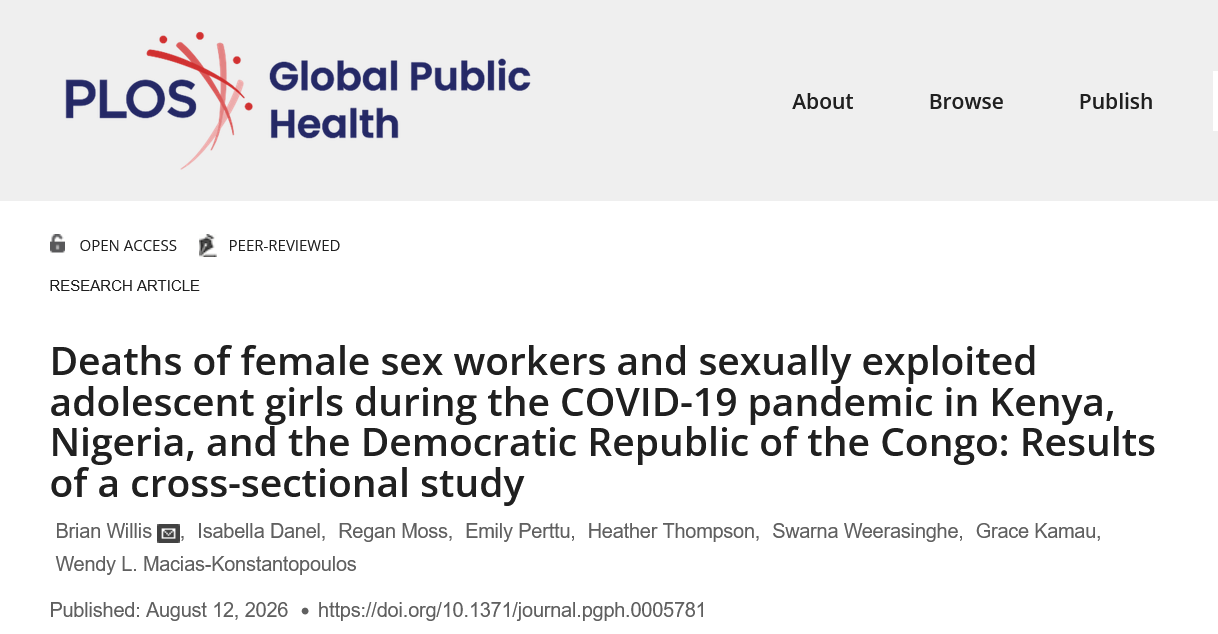
Published in PLOS Global Public Health on 12 August 2026, the study, titled Deaths of female sex workers and sexually exploited adolescent girls during the COVID-19 pandemic in Kenya, Nigeria, and the Democratic Republic of the Congo: Results of a cross-sectional survey, documented 3,810 deaths across the three countries.
The findings reveal that maternal causes accounted for 1,084 deaths (28.5%), making them the leading overall cause of death. Homicide was another major contributor, accounting for more than one in five reported deaths, highlighting the severe levels of violence and insecurity experienced by these marginalised populations.
Maternal healthcare remains a critical gap
The study found significant disparities in access to safe maternal healthcare. Many women and adolescent girls died during pregnancy, childbirth or shortly after delivery, with a considerable number of deaths occurring outside formal healthcare facilities.
In Nigeria, 30.7% of maternal deaths occurred in brothels, while 22.9% occurred in the homes of traditional birth attendants. In the DRC, 55.4% of maternal deaths were reported in small informal hospitals.
The consequences extended beyond the women and girls who lost their lives. The study found that 2,243 (58.9%) of those who died were mothers, leaving behind 4,310 children. Alarmingly, only 37.5% of infants survived when their mothers died during pregnancy, labour or shortly after delivery.
Violence and discrimination continue to cost lives
As the world marks the International Day for the Elimination of Violence Against Women and launches the 16 Days of Activism against Gender-Based Violence, these findings underscore the urgent need to address the multiple forms of violence, exclusion and discrimination experienced by female sex workers.
For sex workers, violence extends beyond physical and sexual assault. Stigma, discrimination, criminalisation, denial of healthcare and limited access to justice create conditions that threaten their safety, health and survival.
The study also documented significant differences in the leading causes of death across the three countries. In Kenya, homicide was the leading cause, accounting for 29.2% of deaths, followed by HIV/AIDS at 20.8% and maternal causes at 15.9%. In Nigeria and the DRC, maternal causes were the leading contributors.
A call for investment in sex worker-led maternal healthcare
In response to the maternal health crisis, Global Health Promise launched a maternal health programme for female sex workers and sexually exploited adolescent girls in Africa. Through partnerships with sex worker organisations and other NGOs in Nigeria, Uganda and Kenya, the programme has supported more than 400 pregnant women and adolescent girls to access prenatal care and deliver in hospitals.
The programme also provides additional support, including food, temporary shelter and newborn supplies, depending on available funding.
According to Dr. Wendy Macias-Konstantopoulos, Associate Professor of Emergency Medicine at Harvard Medical School and senior author of the study, the findings expose deep inequalities in maternal healthcare, widespread fatal violence and the devastating consequences of maternal deaths for surviving children.
ASWA calls for urgent action
The Africa Sex Workers Alliance (ASWA) calls on governments, donors, healthcare institutions and development partners to recognise maternal healthcare and protection from violence as essential rights for female sex workers.
As the 16 Days of Activism begin, ASWA urges stakeholders to:
- Invest in accessible, affordable and non-discriminatory maternal healthcare for sex workers.
- Guarantee safe antenatal, delivery and postnatal services.
- End stigma, discrimination and criminalisation that prevent sex workers from accessing essential healthcare and justice.
- Strengthen protection, prevention and accountability mechanisms against violence targeting sex workers.
- Increase sustainable funding for sex worker-led organisations and community-based interventions.
The deaths documented in this study are more than statistics. They represent women, mothers, adolescent girls and families whose lives have been profoundly affected by preventable deaths, violence and systemic inequalities.
Sex workers’ rights are human rights. Every sex worker deserves safety, dignity, quality healthcare and justice, without discrimination.
As ASWA marks this year’s International Day for the Elimination of Violence Against Women, the message is clear: Ending violence against women must include ending violence against sex workers. No woman should be left behind.
Read the full study: https://journals.plos.org/globalpublichealth/article?id=10.1371/journal.pgph.0005781