Eswatini has made remarkable progress in its fight against HIV over the past decade. Despite having one of the highest HIV prevalence rates in the world—with approximately 24.8% of adults living with the virus—the country has achieved the UNAIDS 95-95-95 targets through sustained investments in prevention, treatment, and community-led services.
This means that most people living with HIV in Eswatini know their status, are receiving treatment, and have achieved viral suppression. Consequently, new HIV infections have declined significantly, demonstrating the profound impact of accessible, community-based care.
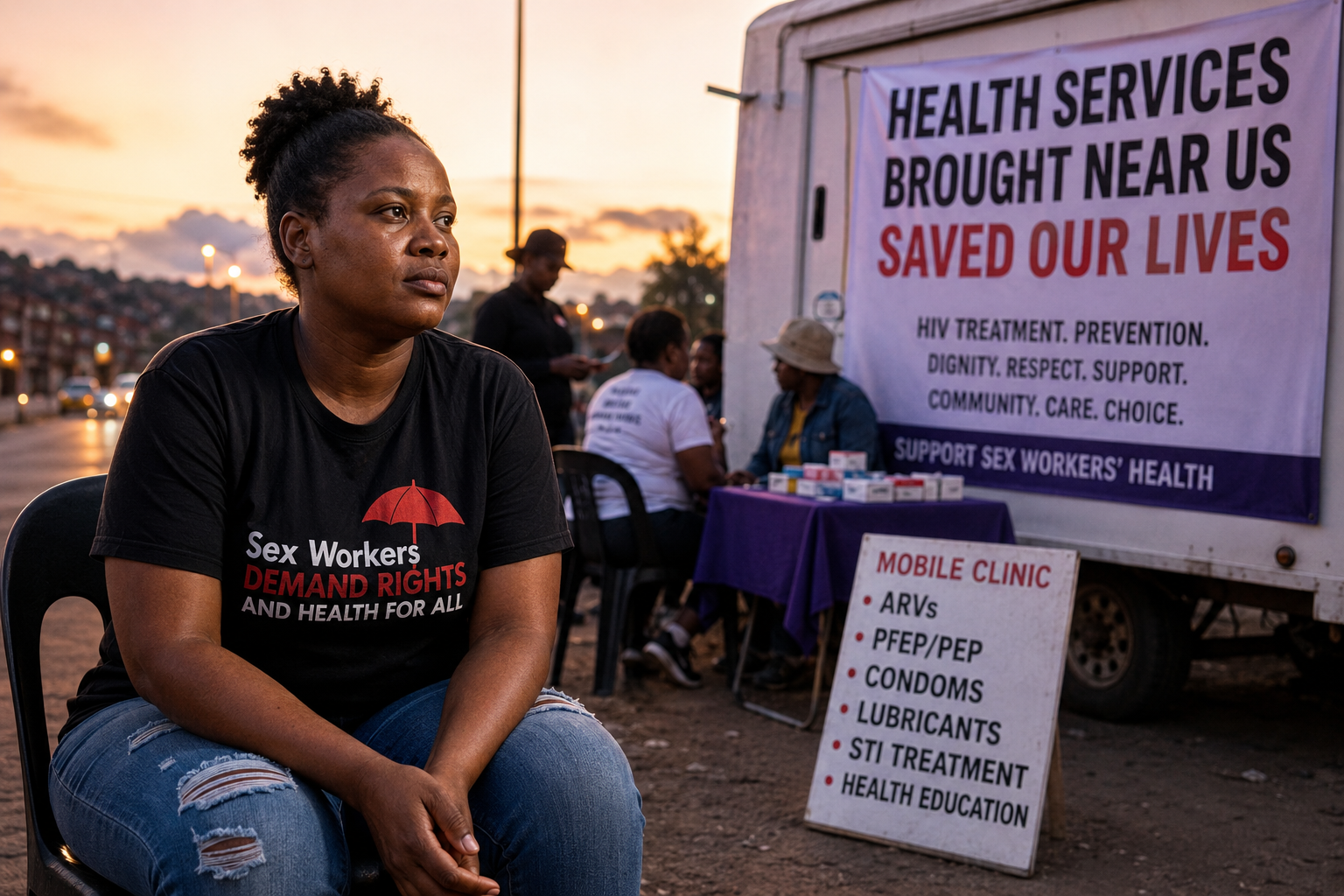
For years, these services were readily available to sex workers, one of the populations most affected by HIV. Mobile clinics brought treatment, prevention commodities, and other essential health services directly to communities, helping sex workers stay healthy and adhere to their medication.
“I could say life was smooth for us. Health services were brought near us for free,” explained MaZ*, a 33-year-old sex worker from Eswatini, when asked to describe life before the withdrawal of funding.
For sex workers living with HIV, the support extended far beyond medication. Community programmes provided education, follow-up care, and adherence support to help people remain on their treatment regimens.
“I would say it was easy for most. People were educated and given all the support and follow-up for them to never withdraw from treatment,” MaZ recalled.
These comprehensive services included antiretroviral therapy (ART), PrEP, PEP, condoms, lubricants, and regular health support. According to MaZ, these interventions played a critical role in keeping sex workers healthy and preventing dangerous interruptions in HIV treatment.
A Weakened Support System
Today, that vital support system has weakened significantly.
“Most projects that provided this service are now closed,” MaZ said.
Although HIV treatment remains available through government health facilities, accessing it has become increasingly difficult. Many sex workers struggle to find transport money or pay for additional medications prescribed at the clinics.
“Currently, it’s not easy to access treatment due to a shortage of money to buy some treatments being prescribed in the clinic,” MaZ explained.
As a result, some sex workers are no longer able to maintain consistent care.
“Some are withdrawing from treatment, lacking transport fees,” she said.
The Cost of Interrupted Care
For people living with HIV, interruptions in treatment can have serious health consequences. Consistent access to medication is essential for maintaining viral suppression and preventing HIV transmission. Yet for many sex workers, immediate survival needs often take priority over healthcare. When income is uncertain and basic necessities such as food, rent, and school fees are at stake, seeking treatment becomes a secondary luxury.
“If my health doesn’t enable me to go to work as I used to, that means money will also be lacking in the house, leading to unpaid school fees, food, rent, uniform, etc.,” MaZ said.
The effects of these funding cuts are becoming increasingly visible within the community.
“Some no longer look healthy and strong for this kind of work,” she observed.
Beyond physical health, stigma remains a major barrier. Despite national progress in HIV treatment, discrimination and misconceptions continue to plague those seeking care and support.
“Some are not yet educated on this, bringing stigma and discrimination to those living with HIV,” MaZ noted.
An Urgent Appeal for Refunding
Despite these mounting challenges, sex workers continue to seek care through the few community projects that manage to remain operational.
“There are still small existing projects which provide some of the services that were provided,” she explained.
For MaZ, the message to the international community is clear: community-led HIV programmes and donor-funded services were making a life-saving difference. This is particularly vital in a country that had successfully reduced new HIV infections by more than 70 percent over the last decade through targeted investments.
“All the funds that were cut were having a great impact,” MaZ emphasized.
As treatment interruptions rise and financial barriers grow, she fears that more sex workers living with HIV will struggle to survive. Community-led programmes have historically played a critical role in helping key populations access treatment, prevention services, and adherence support. Without sustained funding, MaZ fears that the historic gains Eswatini has made against HIV could be entirely reversed.
If she could speak directly to donors and decision-makers, her appeal would be simple:
“Donors to refund all the projects that were cut,” MaZ appealed.
Name published with consent.