HIV prevention is changing. New options are expanding the ways we can protect our health, while shifts in funding are raising questions about the future of services our communities rely on. For sex workers across Africa, these developments matter when they translate into care we can access, afford and trust.
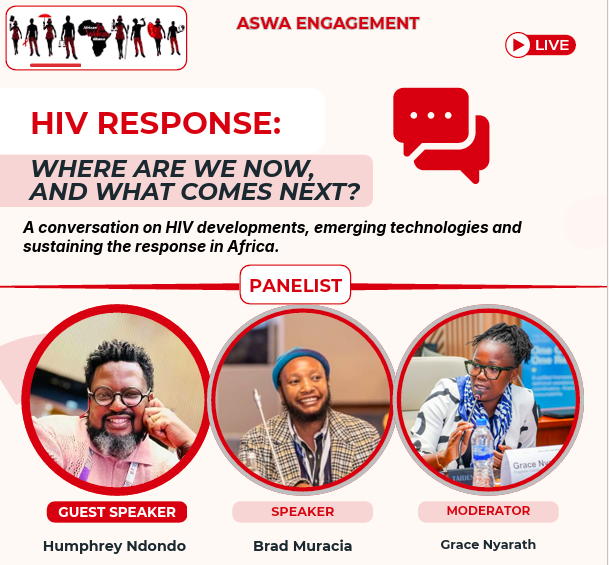
On 29 October 2026, we brought ASWA members, allies and partners together to discuss the evolving HIV response, emerging technologies and sustaining progress for our communities. The webinar also explored how documenting violence can strengthen advocacy and accountability.
Moderated by Grace Nyarath, the session featured Humphrey Ndondo, Senior Technical Advisor for Key Populations, and ASWA’s Brad Muracia. French and Portuguese interpretation supported participation across our network.
Making prevention choice meaningful
Humphrey discussed the expanding HIV prevention toolbox, including oral pre-exposure prophylaxis (PrEP), the dapivirine vaginal ring and long-acting injectable options such as cabotegravir and lenacapavir.
He emphasised that sex workers must help shape how these options are introduced. Clear information, affordable products and reliable supplies are essential. Services also need to reflect our working lives, mobility and privacy needs. Availability and delivery arrangements differ between countries.
“If we innovate without access, we will not change the epidemic.”
— Humphrey Ndondo
The conversation also addressed continuity of treatment for sex workers living with HIV. Convenient medication refills, peer support and referral arrangements for people moving between locations remain important parts of care.
Expanding our choices means ensuring that we can make informed decisions and receive the support needed to continue our preferred prevention or treatment option.
Integration that looks like a salad
As countries move towards integrating HIV services into wider public health systems, Humphrey used a memorable comparison: integration should look like a salad, where the different ingredients remain recognisable, rather than yoghurt, where everything is blended together.
“We don’t want to blend everything into a yogurt.”
— Humphrey Ndondo
His point was that bringing services together must preserve care that responds to our different needs. At a public health facility, we should be able to explain our circumstances and receive appropriate support.
Peer outreach, safe spaces and drop-in centres help many of us connect with healthcare. Integration needs to protect those relationships and ensure that we feel supported and respected when seeking services.
Humphrey also highlighted the overlapping barriers experienced by young, migrant, male and transgender sex workers. Our diversity must remain visible in how programmes are designed, delivered and evaluated.
Sustaining the services we trust
Funding was central to the discussion. Humphrey reflected on the pressures facing community organisations as external support declines and explored approaches that could help sustain services.
Peer outreach, violence response and community-led monitoring all require resources. Sustaining healthcare also means investing in the people and organisations that help us reach it.
One approach discussed was social contracting, where governments fund community organisations to deliver agreed services. Humphrey explained that sex worker-led organisations can face barriers to accessing these arrangements, particularly in criminalised settings.
Members called for clearer explanations of how social contracting works and how our organisations can participate. We need accessible information to understand financing proposals, advocate for resources and influence decisions about services.
The exchange identified a need for further learning on how these arrangements could work in different country contexts and how funding could reach sex worker-led organisations.
Building evidence on violence
Brad presented ASWA’s Murder Monitoring Tool and its role in documenting violence against sex workers.
“What happens when a sex worker is killed, and then nobody records the case, nobody even investigates it?”
— Brad Muracia
He explained how documentation can help identify patterns of violence and build evidence for advocacy. Grace clarified that, despite its name, the tool receives reports of different forms of violence, beyond killings.
In his written contribution to the meeting, Brad identified reviewing the outcomes of recorded cases as an important next step. This would involve examining what happened after documentation, whether families received assistance and whether the tool contributed to action.
“This will allow ASWA to distinguish between achievements in documentation, advocacy, referrals and actual justice outcomes.”
— Brad Muracia
Such reviews would help establish what the evidence demonstrates and strengthen its use in policy engagement and resource mobilisation.
Investing in the tool’s future
Brad explained that ASWA has integrated the Murder Monitoring Tool into its ongoing work on violence documentation, advocacy and accountability.
“At ASWA, we see the sustainability of the Murder Monitoring Tool as both an institutional and a movement-building priority.”
— Brad Muracia
He highlighted work to strengthen the capacity of sex worker-led organisations to document and verify cases, use data for advocacy and engage relevant stakeholders. He also recognised the importance of building relationships with legal aid providers, human rights organisations and other allies.
Sustaining this work requires diversified funding, technical maintenance and continued investment in data security. Stronger systems for tracking outcomes are also important for understanding how documentation contributes to change.
Protecting our information
Confidentiality remained central to the discussion. Brad outlined ASWA’s approach to informed consent where applicable, secure storage and restricted access to identifiable case records.
He distinguished information needed for internal verification from information that can safely be shared publicly. When publishing findings, ASWA uses anonymised or aggregated data and considers the risk of identifying individuals, particularly where sex work is criminalised or heavily stigmatised.
“Data protection is not only a technical issue; it is an ethical and institutional responsibility.”
— Brad Muracia
Members also reinforced the importance of protecting community identities when sharing information.
Our leadership must shape what comes next
The webinar connected developments in HIV prevention with questions about access, funding and our rights. It identified priorities for continued engagement, including understanding social contracting, sustaining trusted services and strengthening evidence on the outcomes of violence reporting.
For our communities, progress means being able to choose prevention that suits our lives, continue treatment without interruption and receive care that respects who we are.
As the HIV response evolves, our experiences must guide it. We must have a meaningful role in deciding how services are funded, how they reach us and how our health, safety and rights are protected.