Sex workers across Africa are calling on governments, donors, and health agencies to urgently adopt community-led approaches to rolling out new HIV prevention technologies, according to a new policy brief released by the Africa Sex Workers Alliance (ASWA).
The policy brief is based on a multi-country survey of 66 sex workers from 13 African countries, including both Anglophone and Francophone regions, and highlights strong demand for long-acting HIV prevention options such as CAB-LA and Lenacapavir. The findings show that sex workers are eager to embrace biomedical innovation—provided it is delivered in ways that respect their dignity, safety, and lived realities.
While condoms and daily oral PrEP remain important tools, many sex workers face ongoing challenges that limit their effectiveness. These include difficulty negotiating condom use with clients, adherence challenges linked to daily medication, stigma in health facilities, and fear of discrimination.
According to the ASWA survey, more than 70% of respondents preferred long-acting injectable HIV prevention methods, citing benefits such as multi-month protection, discretion, and reduced dependence on daily pills. Participants said these options better fit the realities of sex work, including irregular schedules, mobility, and power imbalances with clients.
“These new technologies give us more control over our bodies and our health,” one respondent shared. “They protect us even when we cannot negotiate condoms.”
One of the strongest findings from the policy brief is that 90% of surveyed sex workers prefer to access new HIV prevention technologies through community-based, sex-worker-led organizations, rather than public or private health facilities.
Respondents described community-led services as safer, non-judgmental, confidential, and more responsive to their needs. In contrast, many reported ongoing stigma, moral judgment, and fear of exposure when seeking services in formal health facilities.
ASWA warns that facility-only rollout strategies risk excluding sex workers, particularly in countries where sex work remains criminalized or heavily policed.
“Biomedical innovation will not succeed if it ignores social realities,” said ASWA. “Without community leadership, the promise of new HIV prevention tools will remain out of reach for those most at risk.”
Importantly, the survey incorporated responses in both English and French, ensuring representation from Francophone and Anglophone countries. Findings from the French-language responses reinforced the same themes: strong interest in injectable prevention, concerns about stigma in facilities, and a clear preference for peer-led, community-based service delivery.
This consistency across regions strengthens the case for continent-wide policy shifts, rather than fragmented or pilot-only approaches.
Policy Recommendations
The policy brief calls on governments and partners to:
Integrate CAB-LA and Lenacapavir into national HIV prevention guidelines for key populations
Formally recognize and fund sex-worker-led organizations as HIV prevention delivery points
Invest in peer-led education and follow-up systems
Address stigma through health provider sensitization and rights-based programming
ASWA also urges donors to support demonstration projects led by sex workersand to ensure affordable, sustainable access to new prevention technologies.
ASWA emphasizes that advancing sex-worker-led access to new HIV prevention technologies is not only a matter of human rights, but also sound public health policy.
“Sex workers are ready for innovation,” the policy brief concludes. “The question is whether policies will evolve fast enough to meet them where they are—within their own communities.”
Grace Kamau holds a Bachelor Degree in Sociology and Political science from the Catholic University of Eastern Africa.
She identifies as a female sex worker and has worked in the HIV field in relation to key populations for 8 years.
She has previously worked at Bar Hostess Empowerment Programme (BHESP) as Program Officer and worked as a consultant with the Global Network of Sex Work Projects.
Her passion has been working with sex workers on issues of HIV prevention, human rights and movement building.
She has also worked as the National coordinator of the Kenya Key Population Consortium, and she currently works as the African Sex Workers Alliance Regional Coordinator in Nairobi.
She was recently appointed as a member of Feminist Opportunity Now (FON) Africa Regional Coordination Committee (RCAC).
Recently appointed as Mama Cash Supervisor Board member.

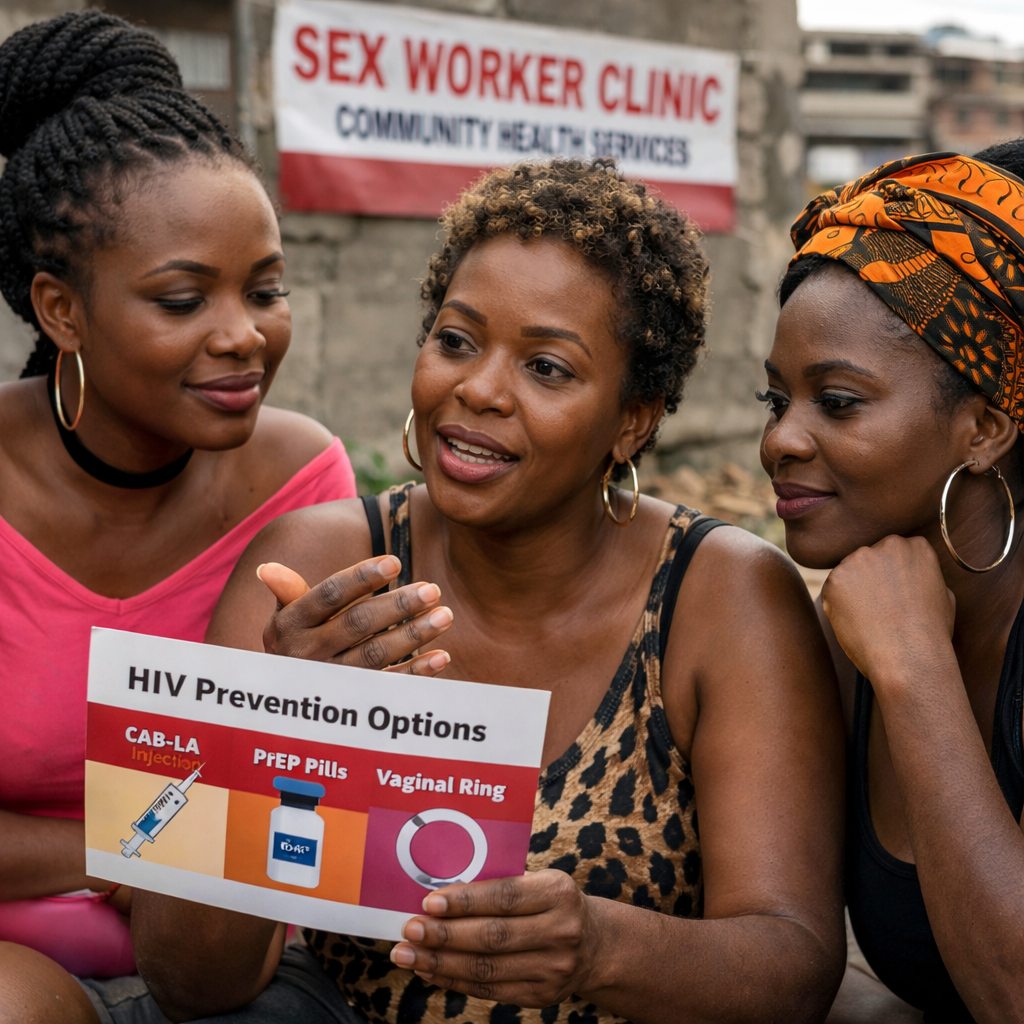





Sex workers inclusion to new HIV prevention technology is our rights #human rights