Across Africa and around the world, conversations about Ebola continue to raise concern, fear, and uncertainty among communities. Public health emergencies often bring anxiety, misinformation, and stigma, especially when people do not have access to clear and accurate information. While Ebola is a serious viral disease that requires urgent attention, awareness and education remain some of the strongest tools communities have to protect themselves and each other.
At ASWA, we believe that health information saves lives, and that no one should be left behind during public health emergencies.
Understanding Ebola
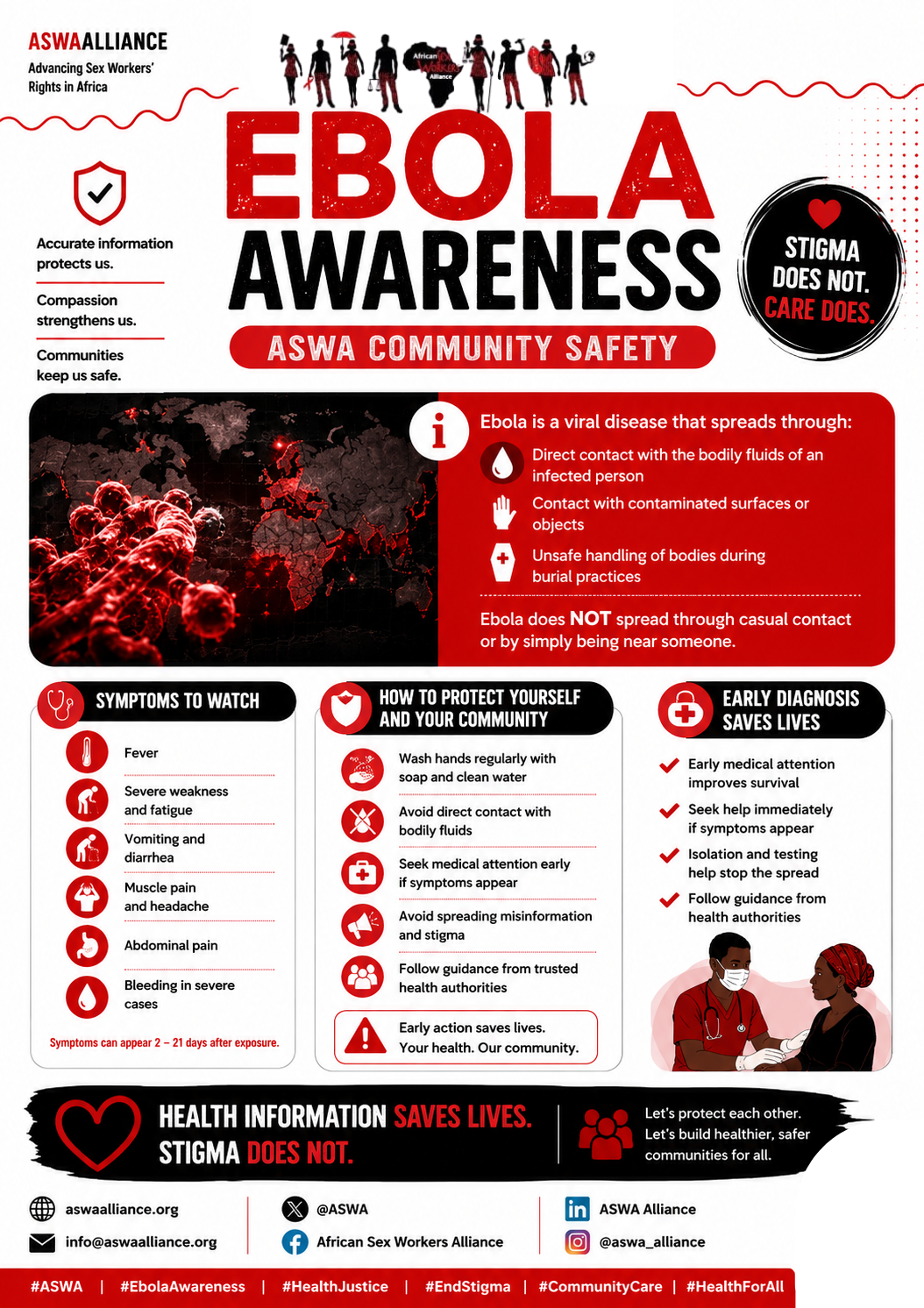
Ebola is a severe viral disease that spreads through direct contact with the bodily fluids of an infected person. This includes blood, vomit, sweat, saliva, urine, and other bodily fluids. The virus can also spread through contact with contaminated surfaces, objects, or unsafe handling of bodies during burial practices.
However, many myths and misconceptions continue to circulate during outbreaks. Ebola does not spread through casual conversations, hugging someone without exposure to bodily fluids, or simply being near a person in public spaces. Fear and misinformation often spread faster than facts, creating panic and increasing discrimination within communities.
This is why public health education is essential.
Recognizing the Symptoms Early
Early diagnosis and medical attention can significantly improve survival and help reduce the spread of the virus. Some common symptoms associated with Ebola include:
- Fever
- Severe weakness and fatigue
- Vomiting and diarrhea
- Headaches and muscle pain
- Abdominal pain
- Bleeding in severe cases
Symptoms can appear between 2 and 21 days after exposure. Seeking medical care immediately when symptoms appear is extremely important, not only for personal health but also for protecting families and communities.
How Communities Can Protect Themselves
Public health responses are strongest when communities have the resources, support, and information needed to respond effectively. Preventing the spread of Ebola requires collective responsibility and community care.
Communities are encouraged to:
- Wash hands regularly with soap and clean water
- Avoid direct contact with bodily fluids
- Follow guidance from trusted health authorities
- Seek medical care early if symptoms appear
- Avoid spreading misinformation or unverified rumors
- Support affected individuals with compassion instead of stigma
Fear should never replace facts.
The Harm Caused by Stigma
During health emergencies, stigma and discrimination can become dangerous barriers to healthcare access. People who fear being judged, isolated, discriminated against, or mistreated may avoid seeking medical help even when they are unwell. This can increase community vulnerability and weaken public health responses.
Marginalized communities, including sex workers, often face additional barriers during outbreaks. These may include discrimination in healthcare settings, lack of access to accurate information, economic insecurity, criminalization, and exclusion from emergency response planning.
Public health cannot succeed when some communities are ignored or pushed further into vulnerability.
At ASWA, we continue to advocate for rights based, inclusive, and community led approaches to health emergencies. Every person deserves access to accurate health information, respectful healthcare services, and protection from discrimination regardless of their background, identity, or occupation.
Why Community Led Responses Matter
Communities themselves are often the first responders during crises. Community led awareness campaigns, peer education, mutual support systems, and accessible information sharing can play a major role in preventing panic and improving health outcomes.
When communities are empowered with knowledge:
- People seek care earlier
- Misinformation decreases
- Trust in healthcare systems improves
- Stigma is reduced
- Public safety becomes stronger
Protecting public health is not only the responsibility of governments and health institutions. It is a collective effort rooted in solidarity, care, and access to information.
Moving Forward Together
As conversations about Ebola continue, ASWA encourages everyone to remain informed, vigilant, and compassionate. Public health emergencies remind us that protecting one another requires empathy, accurate information, and community action.
No one should fear seeking healthcare.
No community should be left behind.
And no person deserves stigma during a health crisis.
Health information saves lives. Stigma does not.