On 2 June 1975, approximately 100 sex workers occupied Saint-Nizier Church in Lyon, France, in protest against criminalisation, police harassment, violence, and the inhumane conditions they were forced to endure. Carrying banners that read, “Our children do not want their mothers to go to jail,” they demanded dignity, safety, and justice.
What began as a courageous act of resistance in Lyon quickly grew into a nationwide movement. Sex workers across France joined in solidarity through church occupations and an eight-day strike that drew international attention to the realities faced by sex workers. Though the protest did not immediately change the law, it ignited the modern global sex workers’ rights movement and laid the foundation for decades of activism demanding recognition, protection, and human rights.
Today, more than five decades later, the demands raised by the women of Saint-Nizier remain painfully relevant.
Across Africa and the world, sex workers continue to face criminalisation, discrimination, violence, arbitrary arrests, extortion, detention, deportation, and exclusion from justice systems meant to protect all people equally. Criminalisation continues to deny sex workers access to labour protections, healthcare, legal protection, and basic human dignity.
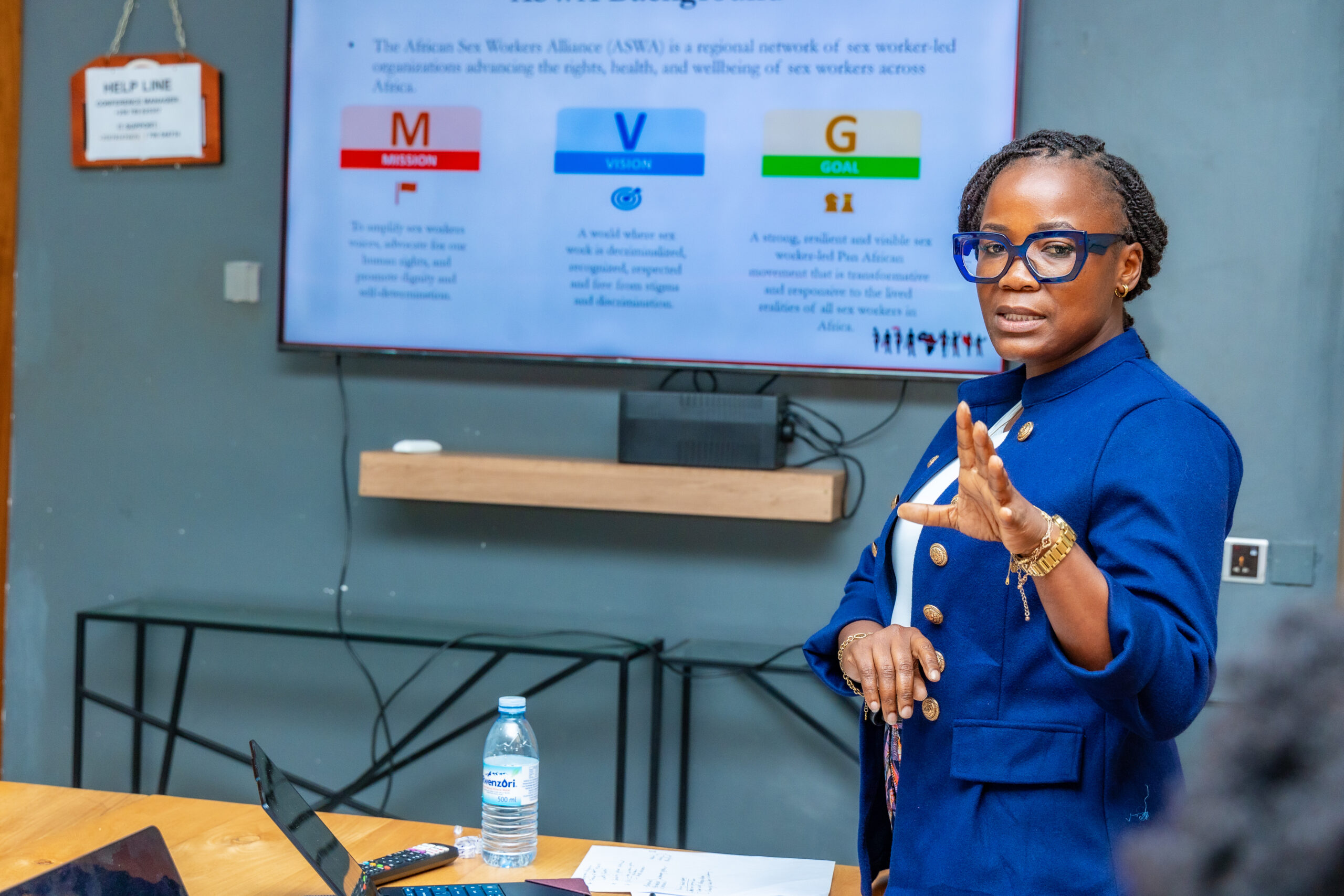
As we commemorate International Sex Workers’ Day 2026, the African Sex Workers Alliance (ASWA) joins the global movement in reaffirming that access to justice is not a privilege, it is a fundamental human right.
Speaking during the commemoration, Grace Nyarath, ASWA Program Coordinator, emphasized the urgent need to address the barriers sex workers continue to face in accessing justice and essential services.
“For us, access to justice means ending violence, ending discrimination, sex workers being able to access healthcare without stigma, and also getting legal support and having human rights protection.”
She further called upon allies, partners, and the broader community to strengthen support for sex workers’ rights advocacy across Africa.
“As we commemorate this day as African Sex Workers Alliance, we call upon all our allies, partners, and the sex workers’ community to support us in our advocacy, in our calls, and also in policies and guidelines creation, making sure that sex workers’ access to justice is key and a right to us.”
Justice for sex workers means ending criminalisation and punitive laws that continue to marginalise and endanger sex workers, while addressing the police violence, harassment, and abuse many face daily. It also means ensuring equal access to legal systems and protection mechanisms, protecting sex workers from violence, exploitation, and discrimination, and recognising sex workers as rights holders who deserve dignity, safety, inclusion, and full protection under the law.
Adding his voice to this year’s International Sex Workers’ Day commemoration, Key Affected Populations Alliance of Lesotho (KAPAL) Executive Director Lepheana Mosooane highlighted the significance of the day as both a celebration of achievements made by sex workers and a reminder that the struggle for equality and justice continues.
“International Sex Workers day means a day to celebrate being a Sex Workers; the achievements accomplished by Sex Workers; a wakeup call and a reminder that the struggle continues until the last Sex Worker in the community is free from criminalization, violence, stigma and discrimination,” Mosooane said.
Reflecting on the state of access to justice for sex workers across Africa, Mosooane acknowledged progress in the recognition and protection of human rights while noting that significant challenges remain.
“Generally, there is acceptance and increasing protection of human rights when Sex Workers access justice. However, some Sex Workers still struggle to access justice due to lack of information and sensitization on both the Sex Workers and the persons responsible for justice.”
Mosooane also underscored the critical role of collective advocacy in advancing sex workers’ rights, arguing that united action is often more effective than isolated efforts.
“The independent advocacy has limitations and gaps in terms of resources, time and capacity invested while collective capacity is inclusive and effective. Secondly, it puts more pressure to the lawmakers and policymakers when it comes from diverse group with different levels of knowledge, skills, capacity and experience.”
In his message to governments, allies, and communities, Mosooane emphasized the need to recognize sex workers as equal citizens and rights holders whose contributions to society and the economy cannot be ignored.
“Sex Workers rights are human rights as sex workers are the same people who are persuaded to vote during elections but sadly denied rights by the same leaders after they have been elected. Furthermore, Sex Workers are the same people contributing to economic growth through shopping, rent, school fees, tax and many other transactions. They care for their children, families and their loved ones. This day should remind the authorities and allies that the best time to decriminalize sex work was yesterday and the second best time to do it is today.”
The history of the Lyon occupation reminds us that collective action is powerful. When sex workers organise, speak out, and demand accountability, they challenge systems that have long silenced and marginalised them.
This International Sex Workers’ Day, ASWA calls upon governments, development partners, human rights defenders, and communities to stand with sex workers in advancing policies grounded in human rights, health, dignity, and justice.
Sex workers are not asking for special treatment. They are demanding what every person deserves: safety, equality, protection under the law, and the freedom to live and work with dignity.
Access to justice for sex workers is key — and it is a right.